
Susan Magsamen
Johns Hopkins Univ. School of Medicine:
Executive Director & Founder, International Arts + Mind (IAM) Lab
Assistant Professor of Neurology
Co-Authors
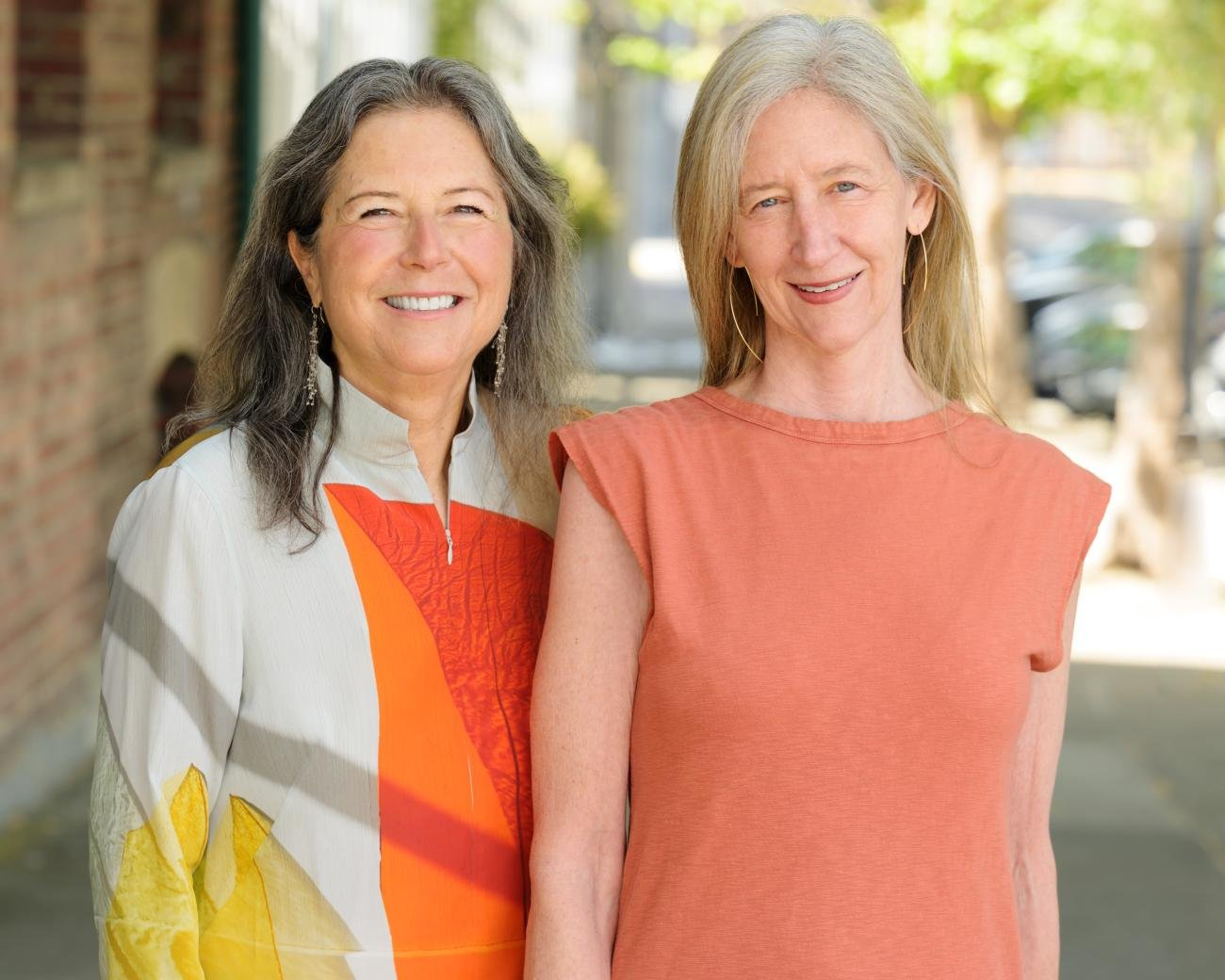
Ivy Ross (l), Google’s Vice President of Hardware Design and Susan Magsamen (r)
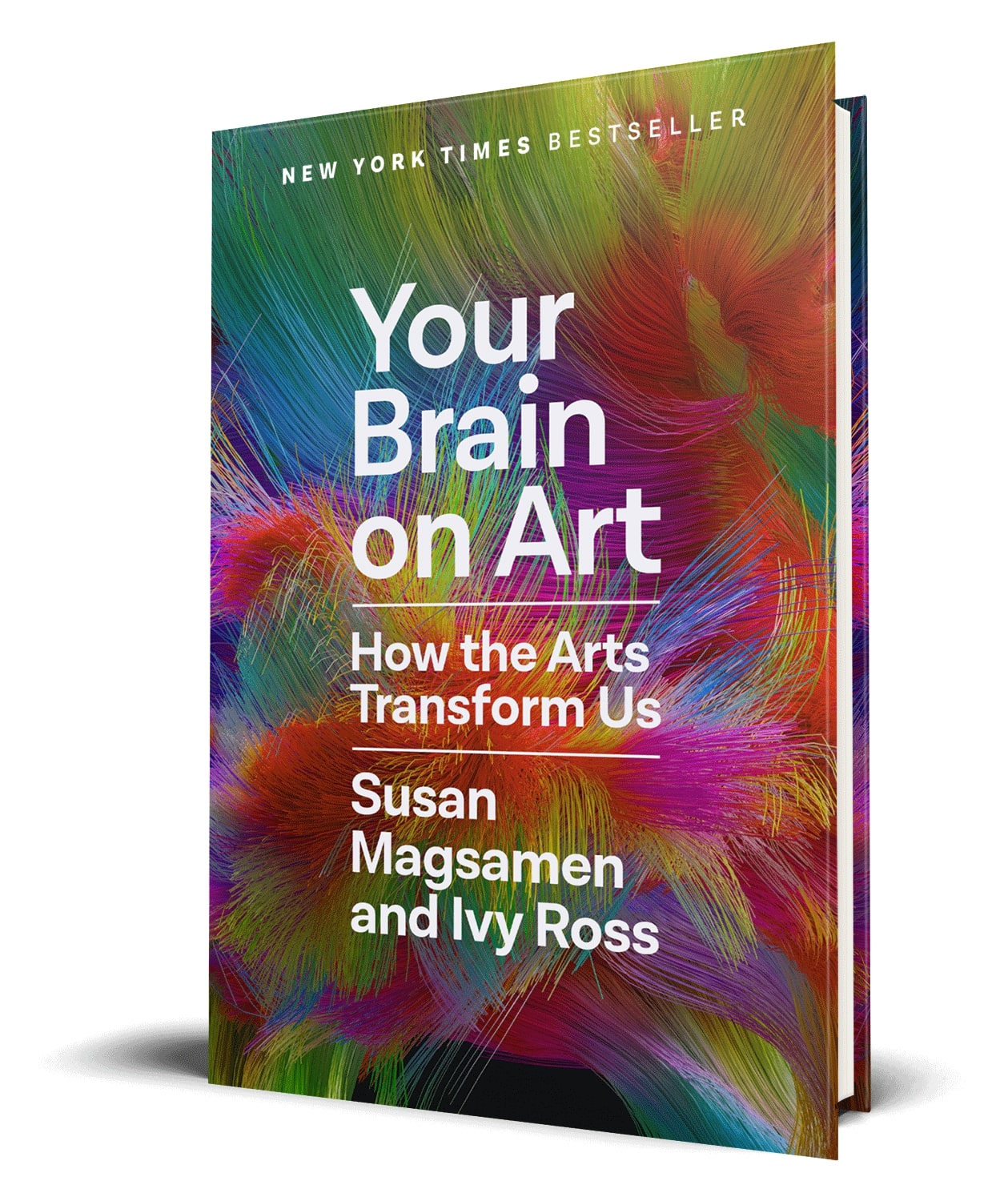
Sia Lakshmi Sampson: Ms. Magsamen, it’s a huge privilege to interview you as co-author of one of my favorite books to read recently! Your profound insights into the relationship between artistic expression and scientific understanding have really strengthened my perspective. I’m so excited to learn directly from you, and to share this discussion, about the intersection of art and health.
What inspired you and Ivy Ross (Google’s VP of Hardware Design) to write Your Brain on Art ? Was there a personal moment or story that sparked the idea?
Ms. Susan Magsamen: For me, the inspiration was deeply personal. I’ve always felt a connection between creativity and healing—growing up, I used art as a way to navigate trauma and make sense of the world. But it wasn’t until I began working in the fields of learning and human development that I saw how widespread this phenomenon was. At Johns Hopkins, I founded the International Arts + Mind (IAM) Lab to bring together neuroscience, arts, and health. Ivy and I met through a shared passion for how environments shape us. We realized there was a huge gap between what science knows and what the public understands about how art impacts the brain. Your Brain on Art was born from that urgency—to bring that knowledge to a broader audience and show that creativity isn’t just a luxury. It’s essential.
Sia: How did your different backgrounds, in science and design, influence how you wrote this book together?
Ms. Magsamen: It was a beautiful convergence. I come from an arts, science and health background, with a focus on how multisensory experiences change the brain. Ivy, coming from industrial design and her role at Google, brought this deeply human-centered, sensory-rich understanding of the world. Together, we blended rigor and intuition. I’d bring the research, and Ivy would often challenge me: “But how does that feel to the person?” That constant interplay between different ways of knowing helped shape a book that’s both evidence-based and emotionally resonant.
Sia: Were there any surprising discoveries you made while researching the connection between art and the brain?
Ms. Magsamen: Absolutely. One of the most surprising things was how quickly and measurably the arts can affect the brain and body. Just 20 minutes of creative engagement can lower cortisol levels. Another was how broad the definition of “art” really is when it comes to the brain—it includes music, dance, visual art, architecture, even nature. We also discovered just how early this relationship begins: even infants show changes in brain activity when exposed to lullabies and color.
Sia: How does participating in the arts actually change how the brain works? Why do you think the brain is wired to respond so strongly to creativity?
Ms. Magsamen: The brain is inherently multisensory and plastic, meaning it changes in response to experience. When you paint, dance, sing, or write, you’re activating motor, emotional, and cognitive networks simultaneously. Art literally rewires the brain—it strengthens neural pathways, builds resilience, and can even restore function after injury. From an evolutionary standpoint, creativity helped us survive. We used storytelling, rhythm, and images to share knowledge, build empathy, and foster connection. It’s embedded in our biology.
Sia: Have doctors or hospitals started using art in real medical treatments? Can you share an example?
Ms. Magsamen: Yes—and it’s growing rapidly. One beautiful example is the use of music therapy with Parkinson’s patients. Rhythm helps regulate movement, allowing patients to walk more steadily. Visual art is being used with people with Alzheimer’s to help spark memories and conversation. There’s even a protocol in Canada where doctors can prescribe museum visits as part of a treatment plan. These aren’t just feel-good interventions—they’re evidence-based approaches that activate the brain’s healing mechanisms. In every sector, there is an art for what we need.
Sia: What’s your opinion on incorporating art therapy into schools or public health programs?
Ms. Magsamen: It’s not only wise—it’s essential. We’re facing an epidemic of mental health issues in young people. Creative expression can help regulate emotions, improve focus, and build social skills. When you integrate art into the school day—not just as a subject but as a way of learning—you create more engaged, empathetic, and resilient students. Public health programs are beginning to see this too. Art is a form of upstream medicine: it can prevent illness before it starts by reducing stress and building community.
Sia: How has neuroscience changed the way we think about the value of the arts?
Ms. Magsamen: It’s given us language and legitimacy. Sadly, for a long time, art was seen as subjective, emotional, even frivolous. Now we can show, through brain imaging and physiological data, that it changes heart rate, brain waves, hormone levels, and even gene expression. We also have expanded our knowledge to include lived experience, art experience, indigenous culture. This shifts the arts from being something that’s “nice to have” to something that’s “need to have.” Evidence in many forms is bridging that gap—it’s making the invisible visible.
Sia: Did you discover any new technologies that are helping scientists study art’s effect on the brain?
Ms. Magsamen: Yes, and it’s one of the most exciting frontiers. fMRI, EEG, and wearable sensors allow us to see how the brain responds to music or color in real time. More technology is on the way. We’re also seeing advances in virtual and augmented reality being used in therapeutic settings—VR art experiences for pain relief, for example. AI is starting to help us identify patterns in how people respond to different aesthetic inputs. All of these technologies are helping us quantify what we’ve always known intuitively—that art matters.
Sia: If you could design an ideal “art and health” space, like a classroom or hospital room, what would it include?
Ms. Magsamen: It would be deeply multisensory. Natural light, calming colors, nature imagery, acoustic design that reduces stress. There would be spaces to make art, to move, to listen to music. It would be designed not just for function but for flourishing. And importantly, it would be co-created with the people who use it—patients, students, caregivers. Design should be empathetic and inclusive. The environments we spend time in literally shape our biology.
Sia: What would you like young people to know or do moving into the future, based on your book’s “art and health” findings?
Ms. Magsamen: That creativity is not a talent—it’s a birthright. You don’t have to be “good” at art for it to change your brain. Just engaging with it changes you. I’d encourage young people to make creativity a daily practice. Draw, dance, sing, build, write. Let your senses guide you. In a world of constant stress and digital overload, art is one of the most powerful tools we have to stay connected—to ourselves, to each other, and to what makes us human.
Sia: This interview has actually deepened my admiration for your work. You and Ivy Ross delved into the transformative power of creativity and its power to bring about healing and well-being in a new way that should inspire all types of people to explore art. The future is very promising in relation to the impact of art. I’m particularly excited for the medical community embracing art’s ability to be a resource and a partner in treating patients! I’m looking forward to art being used to its full potential enhancing well-being for both individuals and communities. Thank you for your work, this book, and all the future projects that will continue pushing art and health forward.